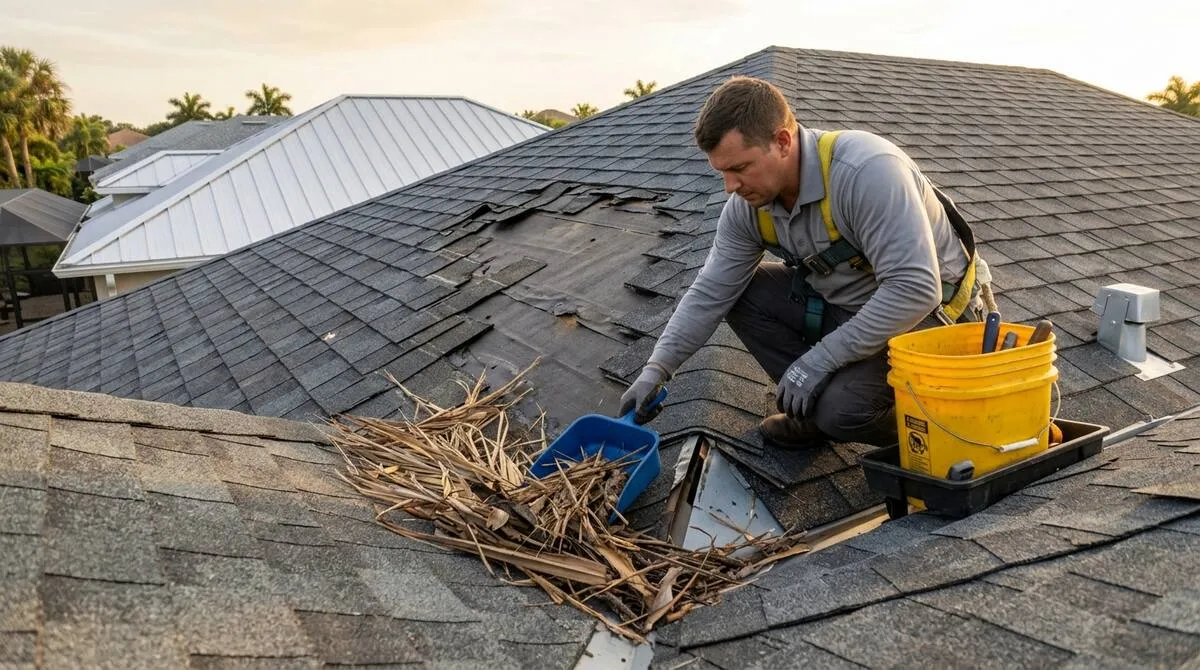
Fall in South Florida doesn’t mean leaves changing color — it means the end of hurricane season, lower humidity, and the perfect window for roof maintenance. The weather is mild enough to work comfortably, and any damage from summer storms is fresh enough to fix before it gets worse.
1. Clear debris from valleys and gutters
Even if you cleaned your gutters before hurricane season, fall brings a second round of debris. Storms drop leaves, palm fronds, and shingle granules into valleys and gutters where they trap moisture against the roof surface.
How to do it: Use a plastic scoop (not metal — it scratches shingles) to clear valleys and gutters. Flush downspouts with a hose to check for blockages. If water backs up, you have a clog that needs a plumber’s snake or a pressure washer.
2. Check for storm damage you missed
Hurricane season ends in November, but the damage it causes doesn’t stop. A lifted shingle that survived the storm can fail months later when the seal finally gives way. Walk the perimeter of your house and look up:
- Any shingles sitting slightly proud of the rest? The seal broke.
- Dark streaks that appeared over the summer? Algae or moisture.
- Flashing that looks lifted at the edges? Wind got under it.
If you see any of these, schedule an inspection. Catching it now costs $0 (free estimate) vs. $500+ for an interior repair after a leak.
3. Inspect and reseal flashing
Flashing is the metal that seals the joints where your roof meets walls, chimneys, vents, and skylights. It’s the most common leak source on residential roofs. The sealant around flashing — typically polyurethane caulk or roofing cement — dries out and cracks in South Florida’s UV exposure.
How to do it: Visually inspect all flashing from the ground with binoculars. Look for gaps, lifted edges, or cracked caulk. If you see any, apply a fresh bead of high-quality polyurethane sealant (not silicone — it doesn’t adhere well to asphalt). For anything you can’t reach safely, call a roofer.
4. Check attic ventilation
After a summer of 150°F attic temperatures, your ventilation system has been working hard. Poor ventilation voids most shingle warranties and shortens roof life by 20–30%.
Check from inside the attic:
- Ridge vent: Is it blocked by insulation or debris? If the ridge vent is clogged, hot air can’t escape.
- Soffit vents: Are they covered by insulation pushed too far back? Push insulation away from the vents to restore airflow.
- Signs of moisture: Black spots on the underside of the decking mean condensation is forming — a sign of poor ventilation.
5. Trim back vegetation
Fall is the growing season in South Florida. Plants that were trimmed in spring have grown back and may be touching the roof. Any branch that touches the roof surface will rub away granules in the wind and provide a bridge for pests.
Cut back any vegetation within 10 feet of the roof. Palms are the worst offenders — fronds drop, collect in valleys, and rot.
When to call a professional
Most of these tasks are DIY-friendly if you’re comfortable on a ladder. But if your roof is steep, two stories, or you’re not confident in your balance, call a roofer. A fall maintenance visit typically costs $150–$300 and includes a full inspection, debris clearing, and minor sealant touch-ups. That’s cheaper than one emergency leak repair.
Schedule in October or November — by December, roofers are booked with holiday-season repairs.
Have questions about your roof? Gabriel's Roofing offers free inspections across the service area.