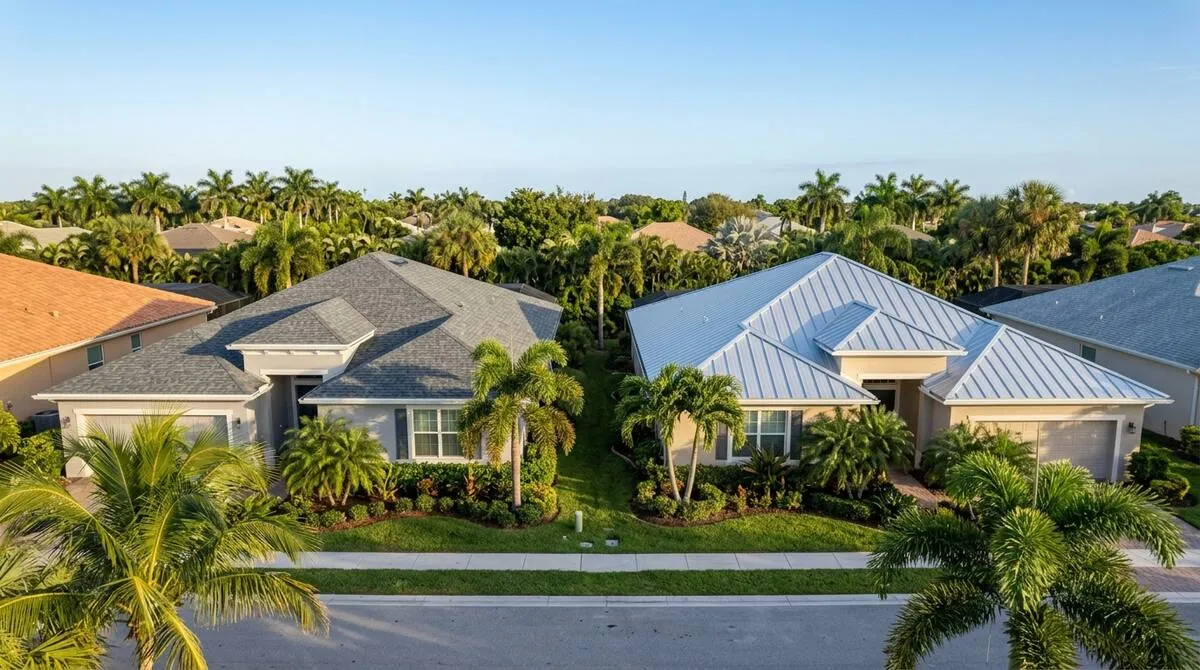
If you’re replacing your roof in South Florida, the two most common choices are architectural asphalt shingles and standing seam metal. Both are code-approved and both work — but they’re not the same product, and the right choice depends on your budget, your plans for the home, and how much you care about energy efficiency.
Cost
Asphalt architectural shingles are the most affordable option. A typical 2,000 sq ft roof costs $8,000–$12,000 installed, depending on tear-off requirements and deck condition.
Standing seam metal runs 2–3x that: $18,000–$30,000 for the same roof. The material itself is more expensive, and the installation requires more skill and specialized equipment.
If budget is the deciding factor, asphalt wins. But cost-per-year tells a different story.
Lifespan
- Asphalt shingles: 15–25 years in South Florida’s climate. UV and humidity shorten the rated lifespan by about 30% compared to cooler regions.
- Standing seam metal: 40–70 years. Galvalume-coated steel with concealed fasteners doesn’t have the failure points that shingles do (no granule loss, no cracking, no curling).
Over 40 years, you’d replace an asphalt roof twice. A metal roof is a one-time investment.
Wind resistance
This matters more in South Florida than anywhere else in the country.
- Architectural shingles are rated for 110–130 mph when properly installed with six nails per shingle and a starter strip. That’s enough for most storms, but a Category 4+ can still lift them.
- Standing seam metal is rated for 140–160 mph with the right clip system. It’s the closest thing to hurricane-proof you can put on a residential roof.
Energy efficiency
Metal roofs reflect solar radiation instead of absorbing it. A Galvalume roof with a heat-reflective coating can reduce attic temperatures by 20–40°F, which translates to 10–25% lower cooling costs in summer.
Asphalt shingles absorb heat. “Cool roof” shingles with reflective granules help, but they don’t match metal’s performance.
Noise and other considerations
Metal roofs are no louder than asphalt in rain when properly installed with a solid deck and underlayment. The old “tin roof” stereotype doesn’t apply to modern standing seam systems.
One real downside of metal: it’s harder to walk on. If you have solar panels, HVAC units, or frequent roof access needs, asphalt is more forgiving.
Our recommendation
- Stay in the home 10 years or less: Asphalt. You won’t recoup the metal premium on resale unless the buyer specifically wants it.
- Stay 20+ years or building forever home: Metal. The lifespan and energy savings pay for the difference.
- In a high-risk evacuation zone: Metal. The wind rating is worth the peace of mind.
- Selling within 5 years: Asphalt, but upgrade to a premium shingle for curb appeal.
Still not sure? Schedule a consultation. We’ll look at your roof, your budget, and your goals, and give you an honest recommendation — even if that recommendation is the cheaper option.
Have questions about your roof? Gabriel's Roofing offers free inspections across the service area.