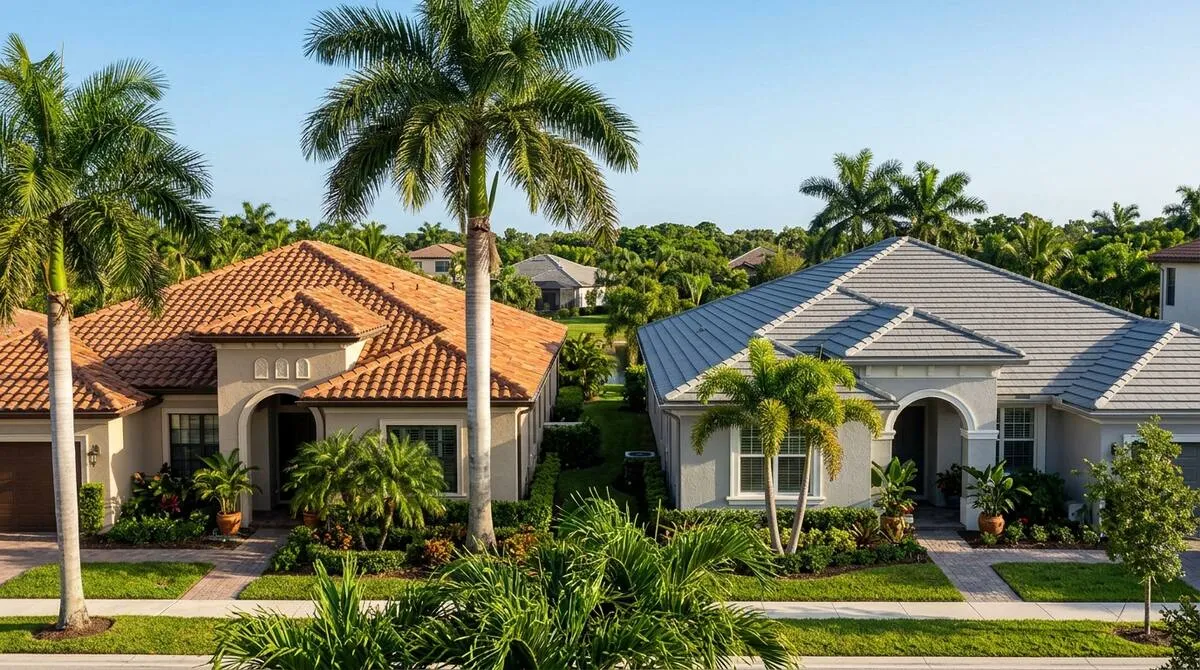
Tile roofs are part of South Florida’s architectural identity. From Coral Gables to Coconut Grove, barrel tile roofs define the Mediterranean aesthetic that sells homes. But not all tile roofs are the same — the two main options, clay and concrete, have different costs, weights, and lifespans that matter more than most homeowners realize.
Clay tile
Clay tiles are made from natural clay fired at high temperatures. They’re the traditional material you see on historic Mediterranean and Spanish- style homes.
Pros:
- Lifespan: 50–100+ years. Clay doesn’t degrade in UV or salt air, making it ideal for coastal South Florida.
- Color: The color is baked into the material, not applied as a coating. It doesn’t fade — a 50-year-old clay tile looks the same color as the day it was installed.
- Weight: Lighter than concrete (around 6–7 lbs per sq ft vs 9–12 lbs), which means less structural reinforcement needed.
Cons:
- Cost: $15–$25 per sq ft installed. A 2,000 sq ft roof runs $30,000–$50,000.
- Fragility: Clay tiles crack under impact — a falling coconut, a dropped tool, or even walking on them wrong. Repairs require matching tiles, which can be hard to find for older profiles.
- Availability: Many European clay tiles have supply chain delays of 3–6 months.
Concrete tile
Concrete tiles are made from Portland cement, sand, and pigment molded into tile shapes. They’re the more common choice for new construction in South Florida.
Pros:
- Cost: $9–$15 per sq ft installed. A 2,000 sq ft roof runs $18,000–$30,000. About 40% cheaper than clay.
- Strength: Concrete tiles are thicker and more impact-resistant than clay. They can handle a dropped tool without cracking.
- Availability: Manufactured domestically, typically 2–4 week lead times.
- Wind rating: Concrete tiles interlock and are rated for 150+ mph winds when properly installed.
Cons:
- Weight: 9–12 lbs per sq ft. Most homes need structural reinforcement to support the load — add $3,000–$8,000 to the project.
- Color fade: The color is a surface pigment, not baked in. After 15–20 years, concrete tiles fade noticeably. A power wash restores appearance but removes a thin layer of material.
- Moisture absorption: Concrete absorbs 10–15% of its weight in water. In South Florida’s humidity, this means the tiles are heavier in practice than their dry weight rating.
Which lasts longer in South Florida?
Clay, by a significant margin. The combination of UV, salt air, and humidity that degrades most materials doesn’t affect fired clay. We’ve restored 70-year-old clay tile roofs in Coral Gables that needed tile replacements but had perfectly sound underlayment.
Concrete tiles last 30–50 years in South Florida. The tiles themselves hold up, but the underlayment beneath them typically needs replacement at the 20–25 year mark — a process called “re-roofing” that removes and reinstalls the same tiles over new underlayment.
The underlayment question
Here’s something most roofers won’t tell you: the tile is not your waterproof layer. The underlayment beneath the tile is what keeps water out of your house. The tile’s job is to protect the underlayment from UV and impact.
This means that regardless of whether you choose clay or concrete, the quality of the underlayment and the skill of the installation matter more than the tile material. A perfectly installed concrete tile roof with premium underlayment will outlast a poorly installed clay tile roof with cheap underlayment.
Our recommendation
- Historic or luxury home: Clay. The aesthetic and longevity are worth the premium, and the home’s structure is likely already designed for tile weight.
- New construction or budget-conscious: Concrete. The cost savings are significant, and the wind rating is excellent for South Florida.
- Replacing an existing tile roof: Match the existing material. Mixing clay and concrete on the same roof looks inconsistent and creates resale issues.
If you’re not sure which is right for your home, schedule a consultation. We’ll assess your roof structure, discuss your budget, and give you an honest comparison — including the total cost of ownership over 30 years, not just the installation price.
Have questions about your roof? Gabriel's Roofing offers free inspections across the service area.