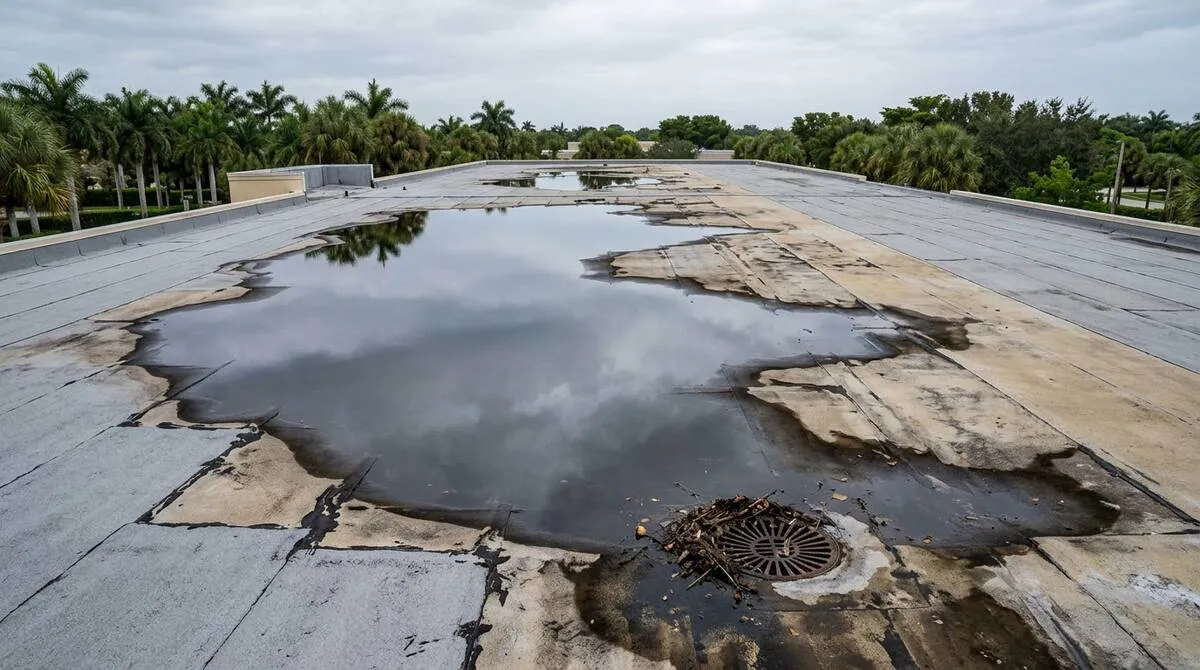
Flat roofs are standard on commercial buildings across Doral, Hialeah, and industrial areas throughout Miami-Dade. They’re also increasingly popular on modern residential architecture. But “flat” is a misnomer — a flat roof should never be truly flat. It needs a slope, and when that slope fails, water collects, and problems start.
The problem with ponding water
Water that sits on a roof for more than 48 hours after rain is called “ponding.” In South Florida’s climate, ponding water causes three specific problems:
- Membrane degradation: UV rays hit the water, magnify, and superheat the membrane beneath. A TPO or modified bitumen membrane that should last 20 years degrades in 8–10 under chronic ponding.
- Algae and vegetation: Standing water grows algae, which turns into organic matter, which turns into soil, which grows weeds. We’ve pulled 3-foot-tall plants out of roof drains on buildings that looked fine from the street.
- Structural load: Water weighs 62.4 lbs per cubic foot. A 10x10 foot pond that’s 2 inches deep adds 1,040 lbs to the roof structure. Deep ponding after heavy rain can exceed the structural capacity of older buildings.
How to identify drainage problems
You don’t need to climb on the roof to spot drainage issues. Look for:
- Dark, rectangular stains on interior ceilings — water is ponding above and finding a seam to penetrate.
- Vegetation growing on the roof — visible from adjacent buildings or drone photos. Any green on a flat roof is a red flag.
- Water marks around drains — visible on satellite imagery and drone inspections. The area around a functioning drain should be the cleanest part of the roof, not the dirtiest.
- Bubbles or blisters in the membrane — trapped moisture from ponding has delaminated the membrane from the substrate.
Common causes
1. Insufficient slope
Building codes require a minimum 1/4 inch per foot slope on flat roofs. Many older buildings in Miami-Dade were built with less, or the slope has settled over time. The fix is to install tapered insulation under the membrane during the next re-roof — this creates the slope without changing the structure.
2. Clogged drains
Flat roof drains (scuppers and internal drains) clog with debris faster than gutters because everything on the roof flows toward them. A single palm frond over a drain opening can back up water across an entire roof section.
Fix: Install drain guards and clean them quarterly. If your building has internal drains (pipes that run through the building), have them snaked annually.
3. Membrane shrinkage
TPO and EPDM membranes shrink over time, pulling away from flashing and creating low spots where water collects. If you see the membrane pulling at walls or curbs, it’s shrinking and the drainage has changed.
Fix: Membrane shrinkage is a sign the roof is near end of life. Patch the low spots in the short term, but budget for replacement within 2–3 years.
4. Settling or structural deflection
Older buildings settle, and the roof structure can deflect (bow downward) under load. This creates a low spot that wasn’t there when the roof was installed. You’ll see it as a consistent ponding area in the same location after every rain.
Fix: Structural deflection requires an engineer’s assessment. The fix may involve adding support beams below or installing a tapered overlay system above.
Solutions by severity
Minor ponding (less than 1 inch, drains within 72 hours): Apply a reflective silicone coating to the low spots. The coating fills minor depressions and restores reflectivity. Cost: $2–$4 per sq ft.
Moderate ponding (1–2 inches, drains within a week): Install tapered insulation crickets (small saddle-shaped insulation pieces) to redirect water toward drains. This requires removing and reinstalling the membrane in the affected area. Cost: $6–$10 per sq ft of the repaired area.
Severe ponding (2+ inches, doesn’t drain): Full roof replacement with tapered insulation system. This is the only permanent fix. Cost: $12–$18 per sq ft for the entire roof.
Don’t wait
Flat roof drainage problems never fix themselves — they only get worse. Every rain adds more water, more weight, and more membrane damage. If you suspect drainage issues, schedule an inspection. We use drone photography to map ponding areas after rain and provide a written drainage assessment with repair options ranked by cost and longevity.
Have questions about your roof? Gabriel's Roofing offers free inspections across the service area.