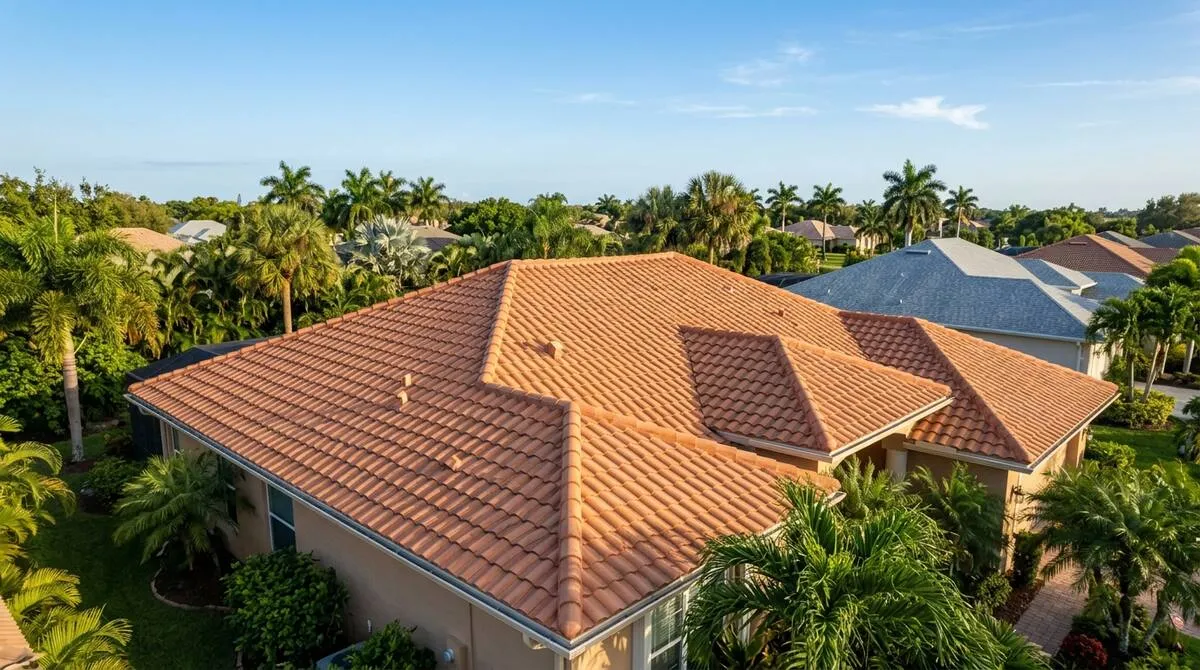
Hurricane season runs from June 1 to November 30, and the roof is the part of your home that takes the most punishment. The good news is that most storm-related roof damage is preventable — if you prepare before the first warning, not after.
1. Schedule a pre-season inspection
A professional inspection catches the things you can’t see from the ground: loose flashing, compromised sealant, soft decking, and shingles that look fine but have lost their adhesive seal. We recommend scheduling this in April or May, before roofers get booked solid.
2. Check and clean your gutters
Clogged gutters turn a normal rainstorm into a problem. Water backs up under the shingles, saturates the fascia, and finds its way into your attic. Clear leaves, twigs, and granule buildup from gutters and downspouts. If your gutters sag or pull away from the fascia, that’s a sign they need repair or replacement.
3. Reinforce weak points
- Ridge caps: These are the first to lift in high wind. Make sure they’re properly nailed and sealed.
- Valley flashing: Debris collects here and traps moisture. Clean it out and check for rust or separation.
- Chimney and vent flashing: The sealant around these penetrations cracks over time. Reseal with a high-quality polyurethane caulk.
- Skylights: Check the curb flashing and replace any cracked lenses.
4. Trim overhanging branches
A branch that hangs 6 feet over your roof may not look dangerous, but in 70 mph winds it becomes a battering ram. Trim branches back at least 10 feet from the roof surface. If the tree is on a neighbor’s property, talk to them — most will agree to trim after seeing the risk.
5. Document your roof’s condition
Take photos and video of your roof from multiple angles before storm season. If you need to file an insurance claim after a storm, “before” photos make the difference between an approved claim and a denied one. Store the documentation in cloud storage, not on a phone that might get damaged.
6. Know your hurricane straps
Building codes in Miami-Dade require metal hurricane straps connecting the roof trusses to the wall structure. If your home was built before 1994, these may be missing or insufficient. An inspection can tell you whether your roof is properly strapped — and if it isn’t, that’s a retrofit worth doing.
When to call a professional
If your roof is over 15 years old, has had previous storm damage, or you notice any of the warning signs (curling shingles, dark streaks, sagging), don’t wait for a storm to find out it’s weak. A pre-season inspection costs nothing if your roofer offers free estimates — and most do.
Have questions about your roof? Gabriel's Roofing offers free inspections across the service area.