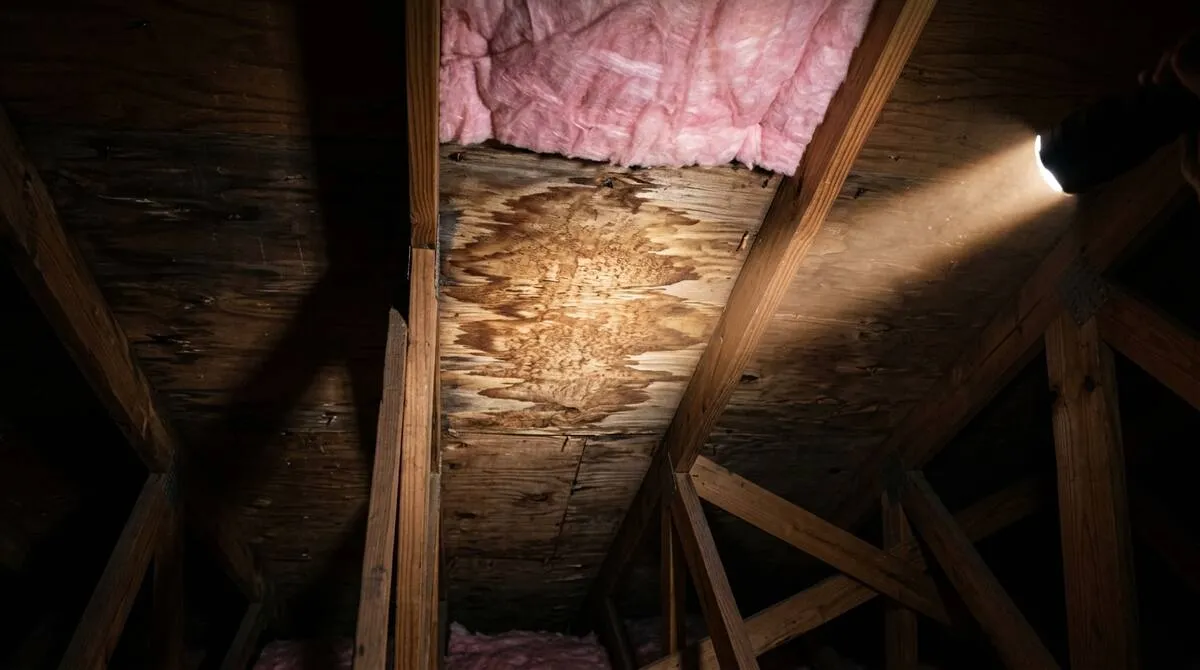
A water stain on your ceiling is not the first sign of a roof leak — it’s the last. By the time water has traveled through the attic, soaked the insulation, and stained the drywall, the leak has been active for weeks or months. The damage is already extensive: rotted decking, moldy insulation, and compromised drywall.
But leaks give earlier warnings if you know where to look. Here’s how to catch a roof leak while it’s still a $200 repair instead of a $5,000 one.
Check your attic first
The attic is your early warning system. Water hits the underside of the roof deck before it reaches the ceiling, and the signs are easy to spot with a flashlight:
- Dark stains on the decking — water has been running down the underside of the plywood. Fresh stains are dark; old ones are gray and dry.
- Wet insulation — push the insulation back from the edges and feel for dampness. Wet fiberglass insulation loses its R-value and grows mold within 48 hours.
- Rust on nails — the roofing nails protrude through the deck. Condensation or active leaks cause them to rust. If you see rust, moisture is getting in.
- Mold smell — a musty attic is never normal. It means moisture is accumulating and not drying.
When to check: After any heavy rain, especially if it was wind- driven. Check the side of the attic that faces the prevailing wind (typically the east and south sides in South Florida).
Look for exterior warning signs
From the ground, you can spot several indicators that a leak is developing:
- Dark streaks on one section of the roof — water is carrying algae or tannins down a specific path. The streak marks the water’s route, and the top of the streak is usually where water is getting in.
- Shingles that look slightly different in one area — a patch of shingles that’s darker, lifted, or sitting at a slightly different angle than the rest is a sign of a previous repair or active movement.
- Gutter granule piles — a concentrated pile of granules in one section of gutter means shingles above that spot are degrading fast. The granules are washing off, and the exposed shingle will leak soon.
- Curling shingles in one area — if curling is isolated to one section rather than uniform across the roof, it’s often a sign of heat and moisture from a leak below, not just age.
The bucket test
If you suspect a leak but can’t find it, do the bucket test:
- Place a bucket in the attic directly under the suspected area.
- Wait for the next rain (or simulate one with a hose on the roof).
- Check the bucket the next morning.
If there’s water, you have an active leak. If the bucket is dry but the decking above is stained, the leak is intermittent — it only happens with wind-driven rain from a specific direction.
Common leak locations (in order of frequency)
- Flashing around chimneys and walls — 35% of leaks
- Vent pipe boots — 20% (the rubber gasket cracks after 10 years)
- Valleys — 15% (debris traps water and degrades the valley flashing)
- Skylights — 10% (curb flashing fails)
- Missing or cracked shingles — 10%
- Ice dam damage — 5% (rare in South Florida but happens in unusual cold snaps)
- Other (satellite dish mounts, HVAC penetrations, etc.) — 5%
What to do if you find a leak
- Don’t wait. A leak that’s dripping into a bucket today will be dripping through your ceiling next month. The damage accelerates because water softens the wood, which then absorbs more water.
- Contain it. Put a tarp or bucket in the attic to catch water and prevent it from reaching the ceiling.
- Don’t poke holes. Some online guides suggest poking a hole in the ceiling to let water drain. This is only necessary if the ceiling is bulging (a sign it’s about to collapse). Otherwise, you’re just creating another hole to repair.
- Call a roofer. Ask for a leak detection visit, not a full inspection. The roofer should trace the leak from the interior stain to the exterior entry point, document it with photos, and give you a repair estimate.
The cost of waiting
- Leak caught in the attic: $200–$500 (flashing repair, shingle replacement)
- Leak caught at the ceiling stain: $1,500–$3,000 (decking repair, insulation replacement, drywall patch)
- Leak caught after ceiling collapse: $5,000–$15,000 (structural repair, mold remediation, full drywall replacement, painting)
The math is simple. Check your attic after the next heavy rain. It takes five minutes and it’s the cheapest insurance you’ll ever buy.
Have questions about your roof? Gabriel's Roofing offers free inspections across the service area.