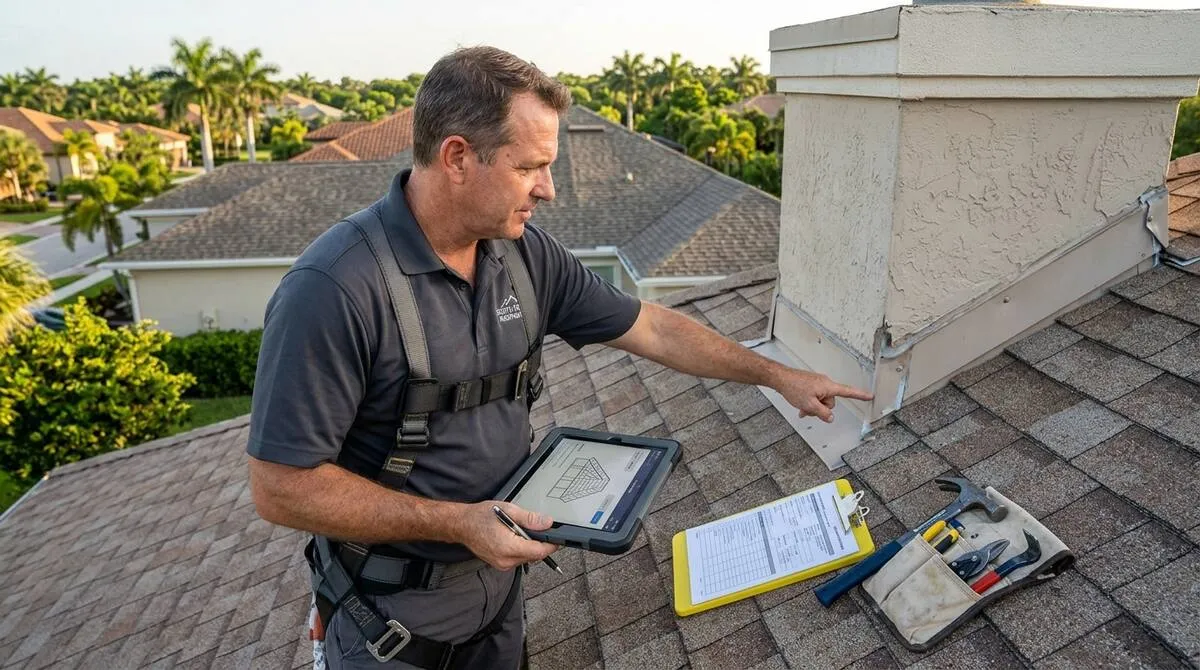
A roof inspection isn’t just a visual once-over. A proper inspection covers 12 specific areas, documents each with photos, and produces a written report you can use for insurance, real estate transactions, or maintenance planning. Here’s what we actually do when we inspect your roof — and why each step matters.
1. Shingle condition
We check for:
- Curling or buckling — the shingle is losing its seal and water can penetrate. Usually means the shingle is near end of life.
- Granule loss — the protective mineral surface is wearing off. Heavy granule loss means the shingle will fail within 2–3 years.
- Cracking — UV damage has dried out the asphalt. Cracked shingles leak even when they look intact from the ground.
- Blistering — trapped moisture in the shingle expands in heat and creates small bubbles. Eventually the blisters pop and leave exposed spots.
Why it matters: Shingle condition is the #1 indicator of remaining roof life. We estimate remaining years based on the severity and distribution of these findings.
2. Flashing integrity
Flashing is the metal that seals joints and penetrations. We inspect:
- Chimney flashing (step and counter-flashing)
- Vent pipe boots (the rubber gasket cracks and shrinks)
- Valley flashing (debris collects here and traps moisture)
- Skylight curbs (the most common leak source on roofs with skylights)
- Drip edge (the metal at the roof perimeter that directs water into gutters)
Why it matters: 80% of roof leaks originate at flashing failures, not in the field of the roof. A roof with good shingles but failed flashing will leak just as badly as one with bad shingles.
3. Underlayment condition
We check the underlayment at edges, valleys, and any exposed areas:
- Is it dry, cracked, or brittle?
- Is it properly lapped (each course overlapping the one below)?
- Is it the original underlayment or has it been patched?
Why it matters: The underlayment is your secondary waterproof layer. If shingles fail, the underlayment is what keeps water out. Old or damaged underlayment means a shingle failure becomes an interior leak immediately.
4. Decking (roof structure)
We walk the roof and feel for soft spots. We also look for:
- Sagging — visible from the street as a dip in the roofline
- Bouncing — the deck flexes under weight, indicating delamination or rot
- Water stains on the underside (checked from the attic)
Why it matters: Soft decking means the structural wood is compromised. This is a safety issue, not just a roofing issue. A roof with soft decking cannot support a new roof installation until the deck is repaired.
5. Attic ventilation
We check from inside the attic:
- Ridge vent — is it clear and functioning?
- Soffit vents — are they blocked by insulation?
- Attic temperature — should be within 15°F of exterior temperature. If it’s 130°F+ in summer, ventilation is failing.
- Moisture signs — black spots on decking indicate condensation.
Why it matters: Poor ventilation voids most shingle warranties and cuts roof life by 20–30%. It also increases cooling costs by 10–15%.
6. Gutters and drainage
We check:
- Gutter alignment — are they pitched correctly toward downspouts?
- Fastening — are they securely attached to the fascia?
- Debris — how much accumulation, and is it causing overflow?
- Downspout discharge — does water exit at least 3 feet from the foundation?
Why it matters: Overflowing gutters cause fascia rot, foundation damage, and landscape erosion. They also back up under the shingles and cause roof-edge leaks.
7. Skylights
We check:
- Curb flashing — the seal between the skylight frame and the roof
- Lens condition — cracks, fogging, or failed seals between panes
- Interior trim — water stains around the skylight opening indicate active or past leaks
Why it matters: Skylights are the #1 penetration leak source. A skylight that’s 15+ years old with original flashing is a leak waiting to happen.
8. Chimneys
We check:
- Cricket (saddle) flashing — the diverter behind wide chimneys
- Mortar joints — are they cracked or crumbling?
- Chimney cap — is it intact and sealed?
- Flue liner — is it visible and undamaged?
Why it matters: Chimneys concentrate water flow against the roof. Even small mortar cracks allow water into the chimney structure, which then travels into the attic.
9. Roof penetrations
Every pipe, vent, satellite dish mount, and HVAC support is a potential leak. We check each one:
- Is the flashing intact?
- Is the sealant cracked or missing?
- Are there signs of previous repairs (tar, caulk, tape)?
Why it matters: Each penetration is a hole in your roof. A roof with 15 penetrations has 15 potential leak sources. We document each one so you know exactly where the weak points are.
10. Previous repairs
We look for signs of past repairs:
- Different colored shingles (patching)
- Tar or roof cement (emergency leak fixes)
- Mismatched flashing materials
Why it matters: Previous repairs tell us where problems have occurred. A roof that’s been patched in 5 different spots has underlying issues that will continue to produce new leaks.
11. Interior signs
We check the attic and ceilings for:
- Water stains on the underside of the decking
- Mold or mildew
- Wet insulation
- Daylight visible through the roof (yes, this happens)
Why it matters: Interior signs tell us where active leaks are happening, even if the exterior looks fine. A stain on the attic deck that’s dry means a past leak; one that’s damp means an active leak.
12. Documentation and report
Everything we find is documented with:
- Photos (close-up and wide-angle for context)
- Location on a roof diagram
- Severity rating (minor / moderate / critical)
- Recommended action (monitor / repair / replace)
- Estimated cost range for recommended work
Why it matters: A written report is your evidence for insurance claims, real estate disclosures, and contractor comparisons. Without documentation, you’re relying on someone’s word against yours.
Schedule a free inspection
Our inspections are free and take 45–90 minutes depending on roof size and complexity. You get a written report with photos, a remaining-life estimate, and honest recommendations — even if the recommendation is “your roof is fine, check again in two years.”
Have questions about your roof? Gabriel's Roofing offers free inspections across the service area.