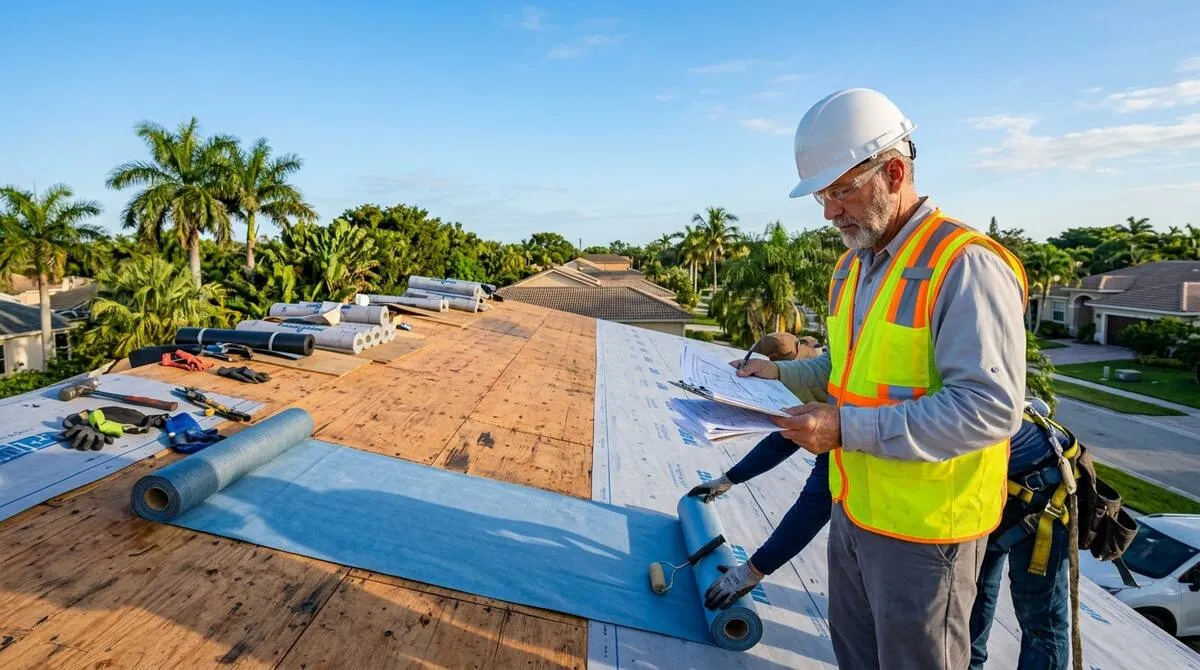
Miami-Dade County has the strictest roofing codes in the United States. After Hurricane Andrew in 1992, the county rewrote its building code to require products and installation methods that survive Category 5 conditions. The rest of Florida followed, and eventually the International Building Code adopted many of the same standards.
The code is updated every three years. Here’s what changed in the most recent cycle and how it affects your next roof replacement.
What changed: underlayment requirements
Before: One layer of 30 lb felt underlayment was sufficient for asphalt shingle roofs.
Now: Two layers of underlayment are required on all sloped roofs:
- A primary self-adhering modified bitumen underlayment (peel-and-stick) as the waterproofing layer
- A secondary synthetic underlayment as a slip sheet and UV barrier
What this means for you: Your next roof replacement will cost $1,500–$3,000 more in materials than it would have under the previous code. But the new underlayment is dramatically more effective — it seals around nail penetrations and doesn’t tear in wind, which means your roof is waterproof even if shingles are lost in a storm.
What changed: shingle fastening
Before: Four nails per shingle was the standard for architectural shingles.
Now: Six nails per shingle is required on all roofs with a slope of 4:12 or steeper. Starter strips must be fully adhered (peel-and-stick, not just nailed).
What this means for you: The wind rating of your roof increases from 110 mph to 130 mph. The additional nails add about $200–$400 in labor cost, but the wind performance improvement is significant — this is the difference between losing a few shingles in a Category 3 and losing the entire roof.
What changed: roof-to-wall connections
Before: Toe-nailing (nailing the truss at an angle into the top plate of the wall) was acceptable on homes built before 1994.
Now: If you replace more than 50% of your roof decking, you must upgrade the roof-to-wall connections to current code — which means installing metal hurricane straps if they’re not already present.
What this means for you: If you have an older home (pre-1994) and your roof deck is in poor condition, a roof replacement can trigger a structural upgrade that adds $3,000–$8,000 to the project. This is the most significant cost increase in the new code.
What didn’t change: product approval
Miami-Dade still requires all roofing products to have a Notice of Acceptance (NOA) from the county. This means every shingle, tile, membrane, and underlayment used in the county must pass wind, water, and impact testing at an approved lab. If a product doesn’t have an NOA number, it can’t be legally installed in Miami-Dade.
This is good for homeowners — it means your roofer can’t substitute cheaper, untested materials. But it also limits your options. Some national products that work fine in other states aren’t approved here.
How this affects insurance
Florida insurance companies are increasingly requiring proof of code compliance before writing or renewing policies. If your roof was replaced after the code update and you have the permit and inspection documentation, you’re in the best position for:
- Lower premiums (some carriers offer 10–20% discounts for code-plus roofs)
- Easier claim approval (the installation meets the standard the adjuster is checking against)
- Policy renewal (some carriers are non-renewing roofs over 15 years that don’t meet current code)
What you should do
- If your roof is 15+ years old: Get an inspection now. If it needs replacement, doing it under the new code means your next roof will be significantly stronger and may improve your insurance situation.
- If you’re replacing your roof: Make sure your contractor pulls a permit and uses NOA-approved products. Unpermitted work doesn’t count for insurance and can complicate resale.
- If you’re buying a home: Ask for the roof’s permit history and product NOA numbers. A roof without permits is a negotiating point, not a feature.
We stay current
We track every code update and train our crews on the new requirements before they take effect. If you’re planning a roof replacement, we’ll walk you through what the current code requires for your specific home — and what it costs, with no surprises.
Have questions about your roof? Gabriel's Roofing offers free inspections across the service area.